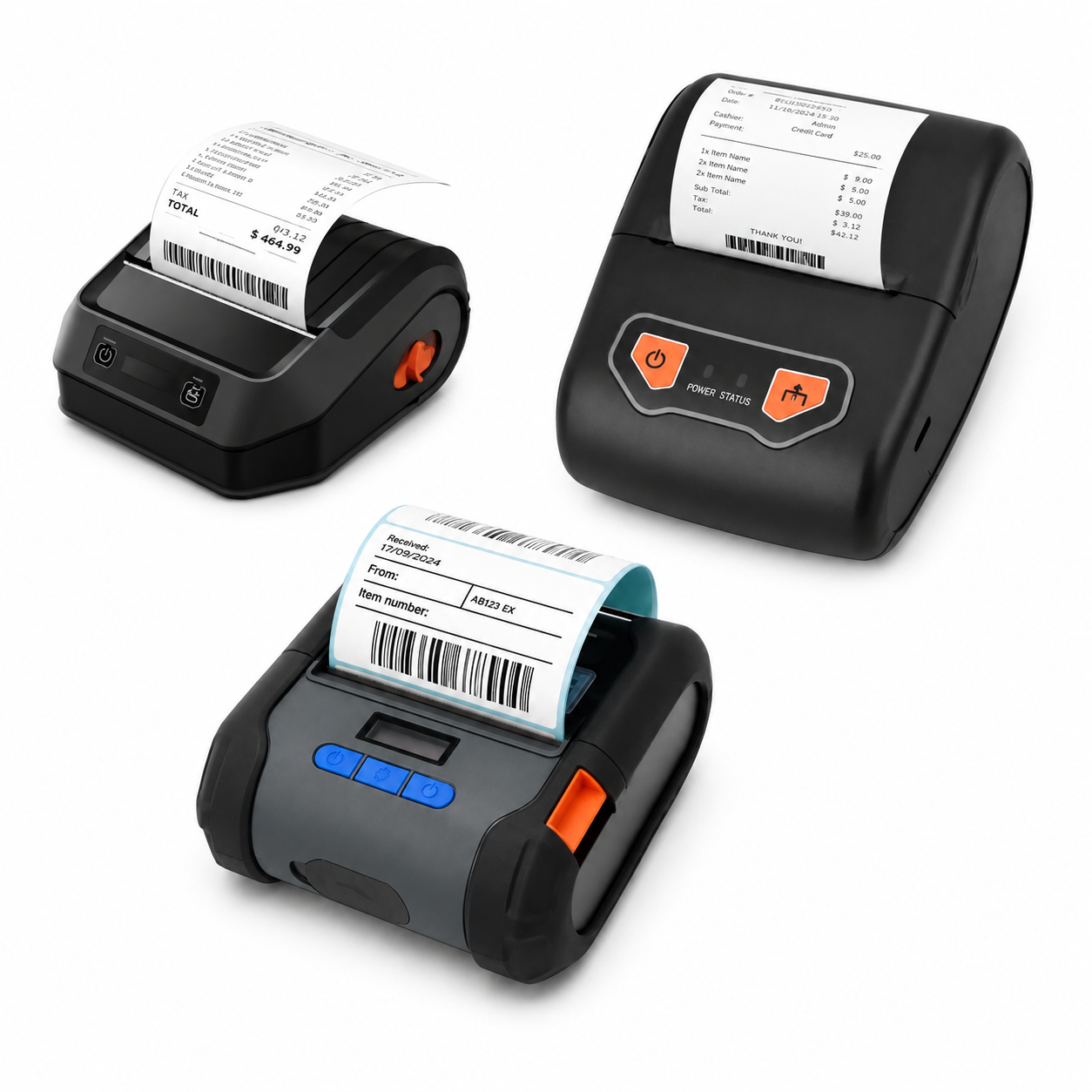
Label printers and receipt printers are both commonly used in retail, logistics, warehousing, restaurants, and other business environments. Although they may look similar and often use thermal printing technology, they are designed for different types of media and applications.
A label printer is mainly used for shipping labels, barcodes, product labels, and inventory identification, while a receipt printer is mainly designed for receipts, bills, and POS transaction records.
So, what is the difference between a label printer and a receipt printer? Let’s look at the two printer types and their most common applications.
1. What Is a Label Printer?
A label printer is designed specifically for printing labels, barcodes, shipping information, product identification, SKU numbers, prices, and other variable information.
Label printers are widely used in e-commerce, logistics, warehouses, retail stores, manufacturing, and product identification.
Common types of label media include:
- Self-adhesive labels
- Gap labels
- Continuous labels
- Fanfold labels
- Barcode labels
- Shipping labels
Direct Thermal Label Printers
A direct thermal label printer uses a heated printhead to print directly onto specially coated thermal labels. It does not require ink, toner, or ribbon.
Direct thermal printing is commonly used for shipping labels, courier labels, warehouse labels, barcode labels, and other short- to medium-term applications.
Because fewer consumables are required, direct thermal printers are particularly popular in e-commerce, logistics, and warehouse applications.
Thermal Transfer Label Printers
A thermal transfer printer also uses a heated printhead, but it works together with a ribbon. Heat transfers material from the ribbon onto the label surface.
Thermal transfer printing is more suitable when labels require better durability or longer storage life. Typical applications include product labels, asset labels, electronics labels, industrial labels, and long-term inventory identification.
Label printers are also available in different printing widths. Smaller 2-inch and 3-inch printers are suitable for compact labels, while 4-inch label printers are commonly used for shipping and logistics labels.

2. What Is a Receipt Printer?
A receipt printer is mainly designed to print receipts, bills, transaction records, and POS documents.
Receipt printers are commonly used in supermarkets, retail stores, restaurants, cafés, convenience stores, hotels, and other point-of-sale environments.
Most modern receipt printers use direct thermal printing. The printhead heats thermal receipt paper directly, so there is normally no need for ink, toner, or ribbon.
58mm Receipt Printers
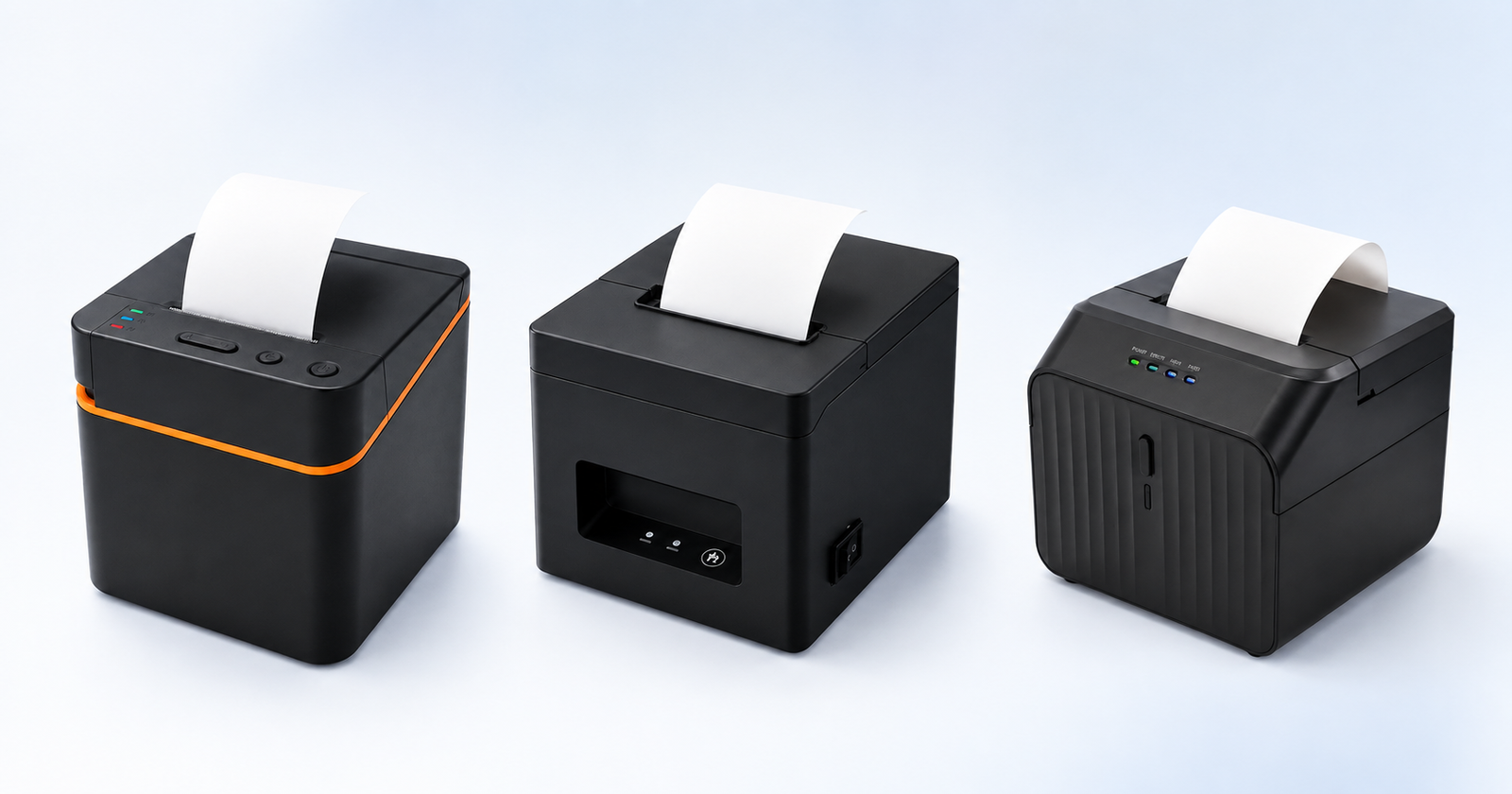
A 58mm thermal receipt printer has a compact design and is suitable for small retail stores, mobile POS systems, ticket printing, takeaway businesses, and applications where counter space is limited.
80mm Receipt Printers
An 80mm thermal receipt printer provides a wider printing area and is commonly used in supermarkets, restaurants, retail stores, and standard POS systems.
Many 80mm desktop receipt printers also include an automatic cutter, which automatically cuts the receipt after printing and can improve efficiency in high-frequency transaction environments.
When selecting a receipt printer, important specifications include paper width, printing speed, cutter type, operating system compatibility, and interfaces such as USB, Bluetooth, Ethernet, or Wi-Fi.
3. Label Printer vs. Receipt Printer
The main difference between a label printer and a receipt printer is not simply the size of the machine. More important differences include the printing media, printing method, paper size, and intended application.
For example, an 80mm printer is not automatically a receipt printer. Some 3-inch label printers can also support media close to 80mm wide. Therefore, printer selection should be based on the supported media and application rather than paper width alone.
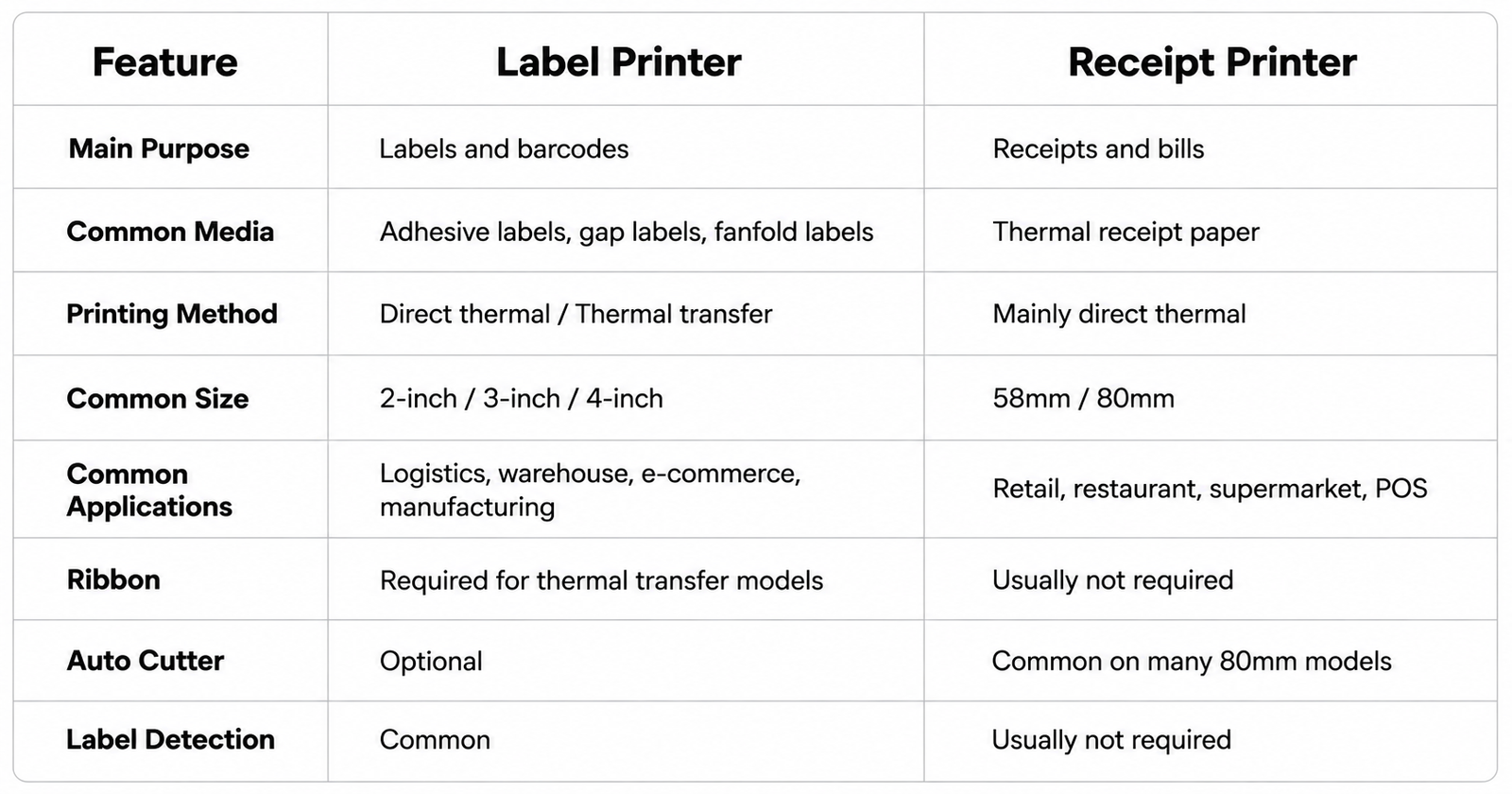
Which Printer Should You Choose?
The easiest way to choose between a label printer and a receipt printer is to start with what your business actually needs to print.
Choose a Label Printer If You Need:
- Shipping labels
- Barcode labels
- Warehouse labels
- Product labels
- Inventory identification
Choose a Receipt Printer If You Need:
- POS receipts
- Restaurant bills
- Retail receipts
- Transaction records
- Customer payment receipts
Once you know what you need to print, the next step is to compare the paper size, printing width, printing method, printing speed, connectivity, and expected daily printing volume.
In short: if your business mainly prints shipping labels, barcodes, inventory labels, or product identification, a label printer is usually the better choice. If your main requirement is printing customer receipts, bills, or transaction records, choose a receipt printer.